Grade a rice sample from a photo.
The rice.ag Grain Scanner finds and measures every kernel in a photo: head rice vs. broken, grain length and shape, colour consistency, and objects worth a second look. Built by rice millers, for anyone who buys, sells, mills or studies rice.
Results in seconds. Follows ISO 7301 / Codex length definitions. How it works
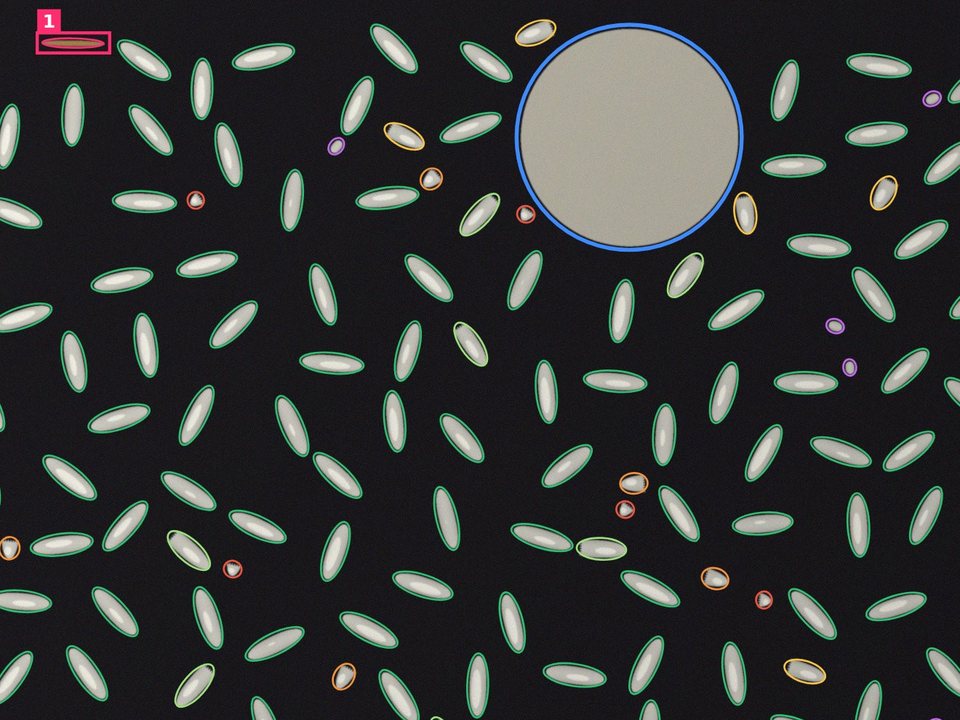 Scanner output on a demo image
What it measures
Head rice & broken %
Each kernel is measured against the sample's average whole-kernel length and sorted into whole, head, large, medium and small broken, and chips — by count and estimated weight.
Grain size & shape
Put a coin in the photo and get length and width in millimetres, length/width ratio, spread, and IRRI length and shape classes — handy for checking you received the variety you paid for.
Colour & suspects
Colour consistency across the sample, plus flags on dark, yellowed or red kernels, husk slivers and round objects — boxed on the photo so a person can check them.
beta Chalkiness is measured when grains are photographed on a lightbox. How to set it up
Three steps, about two minutes
1. Spread
Scatter about a level teaspoon of rice (200–300 grains) on matte black card so no grains touch.
2. Add a coin
Lay a coin flat beside the grains — a Thai 10-baht coin is 26 mm — so lengths come out in millimetres.
3. Shoot & scan
Photograph straight down in even light, then open it in the scanner. Your photo is analysed on your device.
What a photo can't tell you
We'd rather you trust the numbers we do give. A camera sees shape and colour, so:
- Moisture needs a moisture meter or oven test. Use our moisture & drying calculator to sanity-check meter readings against drying records.
- Rice-coloured stones can look identical to grains. Destoners exist for a reason; the scanner flags obvious suspects only.
- Certificates: results are quick-check estimates, not a substitute for laboratory grading or official inspection.
Learn
Broken rice grading, explained
Whole, head rice, brokens and chips under ISO 7301 and Codex — and why the percentage is by weight.
Read →Chainat 1: Thailand's noodle rice
Where the variety came from, what makes it suit noodles, and why unmixed supply matters.
Read →Moisture & drying shrink
The dry-matter formula, worked examples, and how to catch a moisture meter that reads low.
Read →Rice prices, updated daily
Thai, Vietnamese, US, Uruguayan and Pakistani export prices, plus Thai paddy and wholesale prices, all in USD per tonne, with history back decades and a free data download.
See rice prices →